


- Computer Engineering
- Electrical Engineering
- Electronics & Computer Science
- Information Technology
- Electronics & Telecommunication Engineering
- Humanities & Applied Sciences
Electrical Engineering
The Department of Electrical Engineering is a unique amalgamation of electrical, electronics and computer related courses to enable the students to pursue a professional career or higher studies in any of these broad areas. The distinguished and well-qualified faculty with wide range of specializations ensures an exquisite student-teacher rapport.

Program Educational Objectives (PEO’s) :
- PEO1 – Establish their professional careers by offering creative and efficient solutions in the field of electrical engineering and associated fields.
-
PEO2– Develop into an entrepreneur, work for a company that conducts research and development, and pursue higher education.
-
PEO3– Engage in ongoing learning using cutting-edge technologies to use logical and adaptable decision-making to solve societal issues.
- Engineering knowledge: Apply the knowledge of mathematics, science, engineering fundamentals, and an engineering specialization to the solution of complex engineering problems.
- Problem analysis: Identify, formulate, review research literature, and analyse complex engineering problems reaching substantiated conclusions using first principles of mathematics, natural sciences and engineering sciences.
- Design/development of solutions : Design solutions for complex engineering problems and design system components or processes that meet the specified needs with appropriate consideration for the public health and safety, and the cultural, societal, and environmental considerations.
- Conduct investigations of complex problems : Use research-based knowledge and research methods including design of experiments, analysis and interpretation of data, and synthesis of the information to provide valid conclusions for complex problems.
- Modern tool usage : Create, select, and apply appropriate techniques, resources, and modern engineering and IT tools including prediction and modelling to complex engineering activities with an understanding of the limitations.
- The engineer and society : Apply reasoning informed by the contextual knowledge to assess societal, health, safety, legal and cultural issues and the consequent responsibilities relevant to the professional engineering practice.
- Environment and sustainability : Understand the impact of the professional engineering solutions in societal and environmental contexts, and demonstrate the knowledge of, and need for sustainable development.
- Ethics : Apply ethical principles and commit to professional ethics and responsibilities and norms of the engineering practice.
- Individual and Team Work: Function effectively as an individual, and as a member or leader in diverse teams, and in multidisciplinary settings.
- Communication: Communicate effectively on complex engineering activities with the engineering community and with society at large, such as, being able to comprehend and write effective reports and design documentation, make effective presentations, and give and receive clear instructions.
- Life-long Learning: Recognize the need for, and have the preparation and ability to engage in independent and lifelong learning in the broadest context of technological change.
- Project Management and Finance: Demonstrate knowledge and understanding of the engineering and management principles and apply these to one’s own work, as a member and leader in a team, to manage projects and in multidisciplinary environments.
Advisory Committee Members:
|
S. No.
|
Name | Designation & Company Name | Stake Holders |
|
1.
|
Dr. Ramesh Kulkarni | Principal | Head Of Institute |
|
2.
|
Ms. Pragya Jain | Asst Professor and Vice Principal (Academics), ACE | Faculty, ACE |
|
3.
|
Ms. Sangeeta Kotecha | Asst Professor and Head of Department Electrical, ACE | Chairman, HoD, ACE |
|
4.
|
Dr. Swata Deore | Head of Department Electrical, A.C Patil College Of Engineering | Academician |
|
5.
|
Dr. Mohd Adil Sheikh | Assistant professor, Electrical Engineering Department, St. Francis Institute of Technology Division Chair, Student Activities Committee, IEEE Bombay Section | Academician |
|
6.
|
Mr. Satish Naik | LnT Head- Business Development (Offshore Wind HVDC/ HVAC Substation) | Industrialist |
|
7.
|
Mr. Ashwin Kumar Jain | General Manager – CES, Adani Mumbai Pvt Ltd | Industrialist |
|
8.
|
Mr. Saurabh Ail | Technical Engineer, Accenture | Alumni Member |
|
9.
|
Mr. Rashid Ansari | Sr. Engineer at Vision Power Factx | Parent |
|
10.
|
Ms. Priyanka Tripathi | Assistant Prof. ACE Malad | Faculty, ACE |
|
11.
|
Ms. Garima Gurjar | Assistant Prof. ACE Malad | Program-Coordinator |
|
12.
|
Ms. Kshipra Pandey | Assistant Prof. ACE Malad | Faculty, ACE |

Greetings!! It is a great pleasure for me to pen down on behalf of the Department of Electrical Engineeringof Atharva College of Engineering, Mumbai.The Department is enriching knowledge of Electrical engineering among students since 2012to cater the challenging needs of Industry, Society and Service sector.
Electrical Engineering is an exciting and vibrant field that deals with the technology of power generation, transmission and distribution, machines, controlsand automation. The department is Committed for Quality Education, Training & Research. We usemodern teaching aids& techniqueto enhanceknowledge of our pupil.
The department curricular is supported with number of technical and co-curricular activities encouraging students to broaden their horizons of thought, innovate and implement their ideas. The department strives to provide a cooperativeatmosphere for the students to develop analytical and practical skills to resolve real world problems.
We regularly organize Workshops, Seminars and Guest Lectures by renowned academicians and industries expert for the benefit of the Electrical Engineering students’community.To bridge the gap between industry and institute, students are encouraged to undergo Practical Training, Visits and Internship invarious industries to acquireon job experience. This enable them to become employabletechnocrats or successful entrepreneurs in the professional field
In order to ensure high standards of education for its students, the department has constantly upgraded itself by adding well-equipped and fully furnished laboratories to supplement the theory courses. Qualified and dedicated faculty members make this Department a dynamic place to study.State of art infrastructure & laboratory facilities for students & faculty to learn & innovate.
We believes in overall development, as healthy mind stays in a healthy body.We welcome you to the Electrical Engineering Department as undergraduate student and wish all the success in your life.
Prof. Sangeeta Kotecha
Head of Electrical Engineering Department
SYLLABUS
| S.E. | SE Electrical Engineering Syllabus |
| T.E. | TE Electrical Engineering Syllabus |
| B.E. | BE Electrical Engineering Syllabus |
TIME TABLE

11scsd cx
Toppers List AY 2022-23 (ODD)
| SEM 3 Toppers List | |||
| POSITION | NAME OF STUDENTS | CGPA | YEAR OF PASSING |
| FIRST | Parikh Parv | 8.96 | 2023 |
| SECOND | Advait Parab, Prajapathi Anand | 8.54 | 2023 |
| THIRD | Kumawat Kamlesh | 8.29 | 2023 |
| SEM 5 Toppers List | |||
| POSITION | NAME OF STUDENTS | CGPA | YEAR OF PASSING |
| FIRST | Mule Vikram | 9.32 | 2023 |
| SECOND | Gupta Shivlal | 9.05 | 2023 |
| THIRD | Kaushal Jadhav | 8.91 | 2023 |
| SEM 7 Toppers List | |||
| POSITION | NAME OF STUDENTS | CGPA | YEAR OF PASSING |
| FIRST | Komal Chauhan | 8.14 | 2023 |
| SECOND | Kotian Viraj | 8.1 | 2023 |
| THIRD | Hemavathi, Mayur Shelavale | 7.71 | 2023 |
Toppers List AY 2021-22 (EVEN)
| SE 2022 | |||
| POSITION | NAME OF STUDENTS | CGPA | YEAR OF PASSING |
| FIRST | VIKRAM MULE | 9.22 | 2021 |
| SECOND | PRAJAPATI ANURAG VINODKUMAR | 9.09 | 2021 |
| THIRD | KAUSHAL JADHAV | 9.04 | 2021 |
| TE 2022 | |||
| POSITION | NAME OF STUDENTS | CGPA | YEAR OF PASSING |
| FIRST | CHAUHAN KOMAL | 8.95 | 2021 |
| SECOND | NIKAM OMKAR | 8.68 | 2021 |
| SECOND | THONSE SHREYA | 8.68 | 2021 |
| BE 2022 | |||
| RANK | NAME OF STUDENTS | POINTERS | |
| 1st | KHATRI FAIZAN | 9.43 | |
| 2nd | GHADIGAONKAR RUTIKA | 9.41 | |
| 3rd | PANSARE ATHARVA | 9.26 | |
Toppers List AY 2020-21 (EVEN)
| SE | |||
| POSITION | NAME OF STUDENTS | Pointers | YEAR OF PASSING |
| FIRST | Viraj Kotian | 9.3 | 2021 |
| SECOND | Pawar Nishant | 9.26 | 2021 |
| SECOND | Chauhan Komal | 9.26 | 2021 |
| THIRD | Mali Aayush | 9.22 | 2021 |
| THIRD | Bende Aditya | 9.22 | 2021 |
| TE | |||
| POSITION | NAME OF STUDENTS | Pointers | YEAR OF PASSING |
| FIRST | Chougule Sagar | 9.89 | 2021 |
| SECOND | Gargade Sneha | 9.74 | 2021 |
| THIRD | Jadhav Priti | 9.7 | 2021 |
| BE | |||
| POSITION | NAME OF STUDENTS | Pointers | YEAR OF PASSING |
| FIRST | MEVADA PRATIK VINODKUMAR | 10 | 2021 |
| SECOND | MALVANKAR MAYURI SHYAMSUNDAR | 10 | 2021 |
| THIRD | PADTE ANAGHA JAYANT SMITA | 10 | 2021 |
| THIRD | UNNITHAN ADARSH SURESH | 10 | 2021 |
Toppers List AY 2019-20 (ODD)
| TE SEM V 2019-20 | |||
| POSITION | NAME OF STUDENTS | SGPI | YEAR OF PASSING |
| FIRST | SAGGAM KALPITA ARJUN | 9.69 | 2019 |
| SECOND | PADTE ANAGHA JAYANT | 9.62 | 2019 |
| THIRD | CHAUHAN SARITA RAMCHANDRA | 9.46 | 2019 |
| JAWALE ANJALI SANDIP | |||
| SE SEM VII 2019-20 | |||
| POSITION | NAME OF STUDENTS | SGPI | YEAR OF PASSING |
| FIRST | WALAVALKAR NAMRATA SURESH | 9.5 | 2019 |
| SECOND | PANDEY AADITYA AVINASH | 9.48 | 2019 |
| THIRD | MORE VIKSHITA | 9.40 | 2019 |
Toppers List AY 2018-19 (EVEN)
| SE SEM IV 2018-19 | |||
| POSITION | NAME OF STUDENTS | CGPA | YEAR OF PASSING |
| FIRST | JAWALE ANJALI SANDIP | 9.89 | 2019 |
| PADTE ANAGHA JAYANT | |||
| SECOND | CHAUHAN SARITA RAMCHANDRA | 9.68 | 2019 |
| SAGGAM KALPITA ARJUN | |||
| THIRD | MALVANKAR MAYURI SHYAMSUNDER | 9.54 | 2018 |
| TE SEM VI 2018-19 | |||
| POSITION | NAME OF STUDENTS | SGPI | YEAR OF PASSING |
| FIRST | PANDEY AADITYA AVINASH | 9.70 | 2018-19 |
| SECOND | KUWARE RAHUL PRAKASH | 9.59 | 2018-19 |
| THIRD | SURVE VINIT SANTOSH | 9.37 | 2018-19 |
| BE SEM VIII 2018-19 | |||
| POSITION | NAME OF STUDENTS | SGPI | YEAR OF PASSING |
| FIRST | BLENEKAR SANSKRUTI SURYAKANT | 10 | 2018-19 |
| SECOND | PATIL ROHAN | 9.85 | 2018-19 |
| THIRD | SUTAR SANCHITA | 9.69 | 2018-19 |
AET’s ATHARVA COLLEGE OF ENGINEERINGList of Research Paper Publications in International Journal / Conference and National Conference Department of Electrical Engineering |
|||||
| Sr. No |
Name of Faculty
|
No.of Papers Presented / Published
|
Total No. of Papers Till Date
|
||
|
International Journal
|
International Conference
|
National Conference
|
|||
| 01. | Prof. Pragya Jain | 13 | 04 | 08 | 25 |
| 02. | Prof. Sangeeta Kotecha | 20 | — | — | 20 |
| 03. | Prof. Garima Gujar | 02 | 04 | 12 | 18 |
| 04. | Prof. Priyanka Sharma | 08 | 07 | 10 | 25 |
| 05. | Prof. Kshipra Pandey | 01 | — | 02 | 03 |
| 06. | Prof. Priyanka Tripati | 08 | — | — | 08 |
| 07. | Prof. Sowmya Kini | 06 | — | 10 | 16 |
| 08. | Prof. SakthiBala | — | — | — | — |
| 09. | Prof Sonia Fernandes | — | — | — | — |
2023 to 2024
- PTM Report -ELEC 15/09/2023
- Report on Workshop on Python on 12/09/2023
- Webinar Report ELEC – Project Management 29th August 2023
- ELEC Webinar Report – Energy Management and Green Building under ECBC on 28/08/2023
- Alumni talk_Piyushdhake_08-08-23
- Talk on “ Interview and Assessment Test Preparation” Department of Electrical Engineering on 07/08/2023
- Webinar – Electric Vehicle – Your Opportunity to grow (ELEC) 04/08/2023
- T&P Activity report of ELEC Department conducted on 1/8/23
- Alumni talk report_electrical_28-7-2023
2022 to 2023
- project exhibition report . on 21/04/2023
- Report on Seminar – Exploring International Study in the Field of Engineering on 21/03/2023
- WEBINAR ONSTART-UP-IGNITE-ELEVATE-LAUNCH ON 09/03/2023
- Workshop on Revolution of Renewable Energies Bionic way- Tool for Design Thinking on 28.2.2023
- Hands on session on PCB Designing and Workshop 22/02/2023
- Celebration activity on “National Energy Conservation day” – 28.12.2022
- Hands-on-Training Session on DC Machines on 20/09/2022
- Report of Logo & Theme Competition- Engineer’s Day on 15/09/2022
- Introductory orientation on Honours and Minor Degree in Robotics on 25/08/2022
- Alumni talk on “Recent Industry Trends and opportunities in Electrical Engineering” on 25/08/2022
- Webinar Report on Electronics Security, Safety and Automation trend in Market on 03/08/2022
- Webinar Report Resume Building and Internship on 28/03/2022
2020 to 2021
- One day Webinar on “GATE Stratergies for EE Students” on 08/09/2021
- One day Webinar on “Future & Prospects of MS” on 16/07/2021
- One day Webinar on “Employablility Enhancemenet Skills” on 25/06/2021
- One day Webinar on “Cyber Security Awareness” on 25/06/2021
- One day Webinar on “Project management” on 17/05/2021
- One day Webinar on “PCB Designning” on 23/04/2021
2019 to 2020
- Two day Webinar on “EV technologies” on 13th & 14th August 2020
- Two day Webinar on “Energy Savings with high efficiency motors and VFDs and Advancement in Technology” on 13th & 14th August 2020
- One day Webinar on “Future of Nuclear Energy & Second on Power Quality in Power System” on 04/08/2020
- One day Seminar on “3D Simulation and its application in PLC Unit” dated 28/01/2020
2018 to 2019
- One day Seminar on Applications of Power Electronics
- One day Workshop om Introduction to Automation and PLC dated 26/8/2019
- One Day Workshop on “Industrial Automation” dated 26/02/2019
- One Day Seminar on Grid Connected PV System dated 21/2/2019
- Session on “Sustainable clean and renewable energy techonology Innovations & Practices in Global Arena- Part 1 and 2” dated 18-20 February 2019
- One Day Session on Review of Project Presentation dated 15/2/2019
- One Day Innovation Lab Introductory Session dated 16/1/2019
- One Day Session on “iOS App Development” dated 14/1/2019
- One Day Guest lecture on “Introduction to Power Quality Issues” dated 4/01/2019
2017 to 2018
- Guest Lecture on “Introduction to induction Machines,its Designing and Applications” dated 05/10/2018
- One day Workshop on Remote Embedded System dated 11/9/2018
- One Day Session on “Project Counselling and how to write Technical Papers” dated 7/9/2018
- One Day Seminar on “Intelligent Smart Grid : Ac & DC dated 31/8/2018”
- One Day Workshop on “Artificial Intelligence and its Applications” dated 30/8-2018
- Webinars July 2018
- Webinars June 2018
- Webinars May 2018
- Webinars April 2018
- Webinars March 2018
- Webinars February 2018
- One Day Seminar on “Multilevel Inverters” dated on 20/02/2018
2015 to 2017
- Webinars December 2017
- Webinars September 2017-18
- Webinars July-Aug 2017-18
- “EESA” 2017-18_GREENOVATION dated from 04/10/2017 to 05/10/2017
- S.E One Day Visit to Reliance Thermal Power Station, Dahanu, 12/09/2017
- One Day Guest Lecture on “Programmable Logic Controllers” dated on 12/09/2017
- One Day Seminar on “DC Motors and its Industrial Application” dated on 07/09/2017
- One Day Social Awareness Workshop on “Electric Safety and Precautions” dated on 06/09/2017
- T.E One Day Industrial Visit to HVDC Grid, Padghe, 23/08/2017
- One Day Workshop / Hands on Training on “Design of Power Electronic Converters” dated on 21/08/2017
- One Day Workshop / Hands on Training on “Electrical Network Design” dated on 08/08/2017
- Three Days Workshop/ Hands on Training on “Advanced Micro-Controller & its Applications” dated from 21/03/2017 to 23/03/2017
- One Day Seminar on “Microgrids and Distributed Generation” dated on 14/03/2017
- One Day Seminar on Training on “Patenting & Legalities” dated on 27/09/2016
- One Day Workshop on “PCB Designing & Technical Paper Writing” dated on 23/09/2016
- ESA” 2016-17 dated from 22/09/2016 to 23/09/2016
- One Day Workshop on “Electrical Wiring” dated on 22/09/2016
- One Day Seminar on “Renewable Energy & Energy Storage Systems” dated on 21/09/2016
- One Day Guest Lecture on Training on “Challenges in Indian Smart Electric Grids and Smart Cities” dated on 17/02/2016
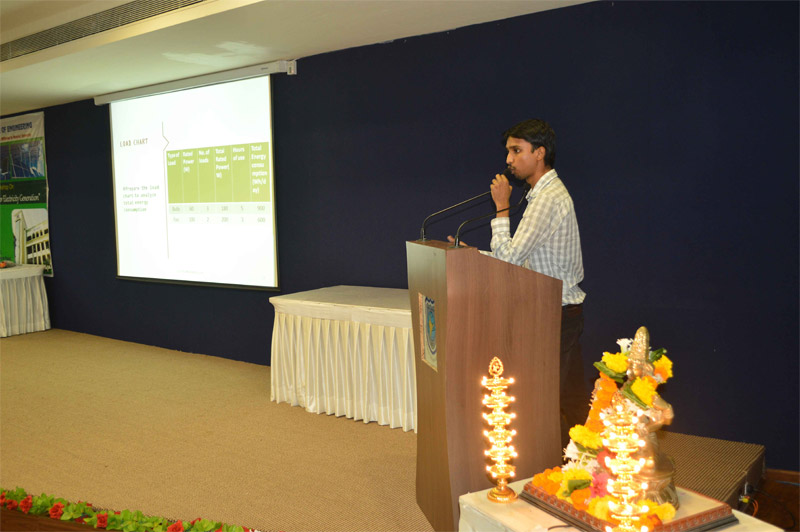
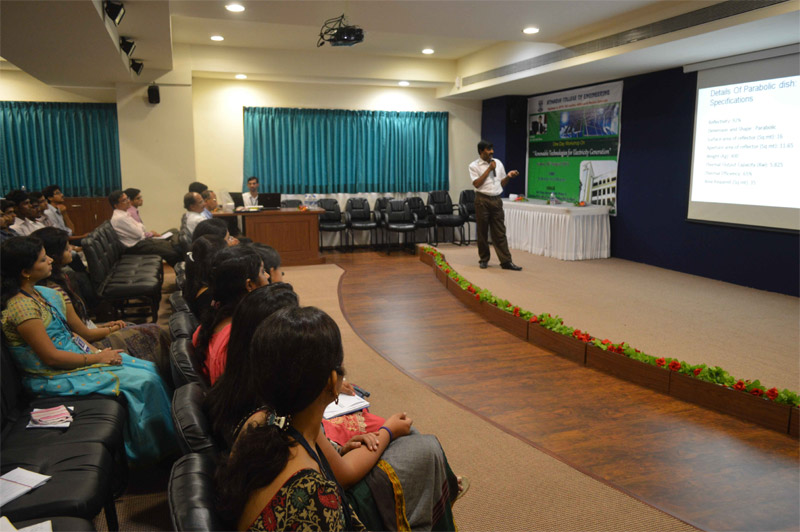
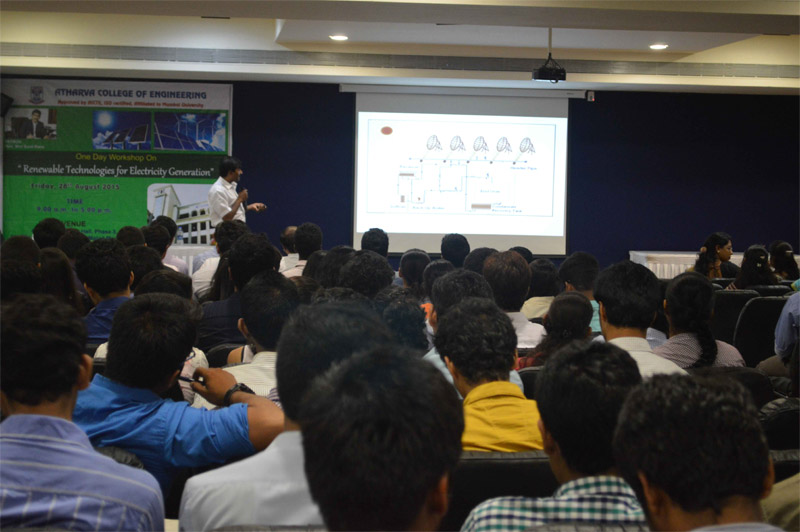
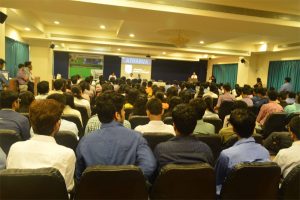
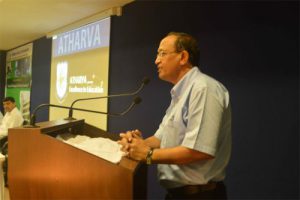
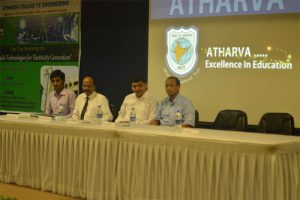
- One Day Workshop on “Renewable Technologies for Electrical Generation” dated on 28/08/2015


Mission:
“To provide optimal Quality of Online lectures with respect to audio / video quality, best innovative topic with the best speaker from any part of the world”
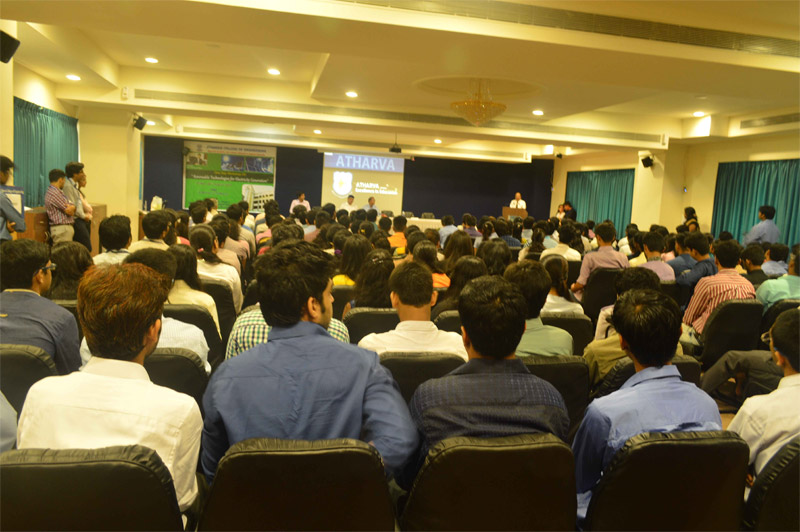
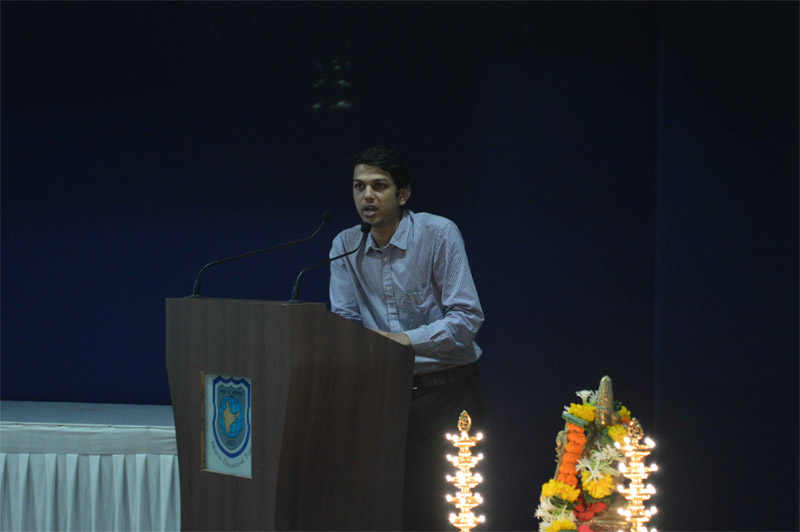
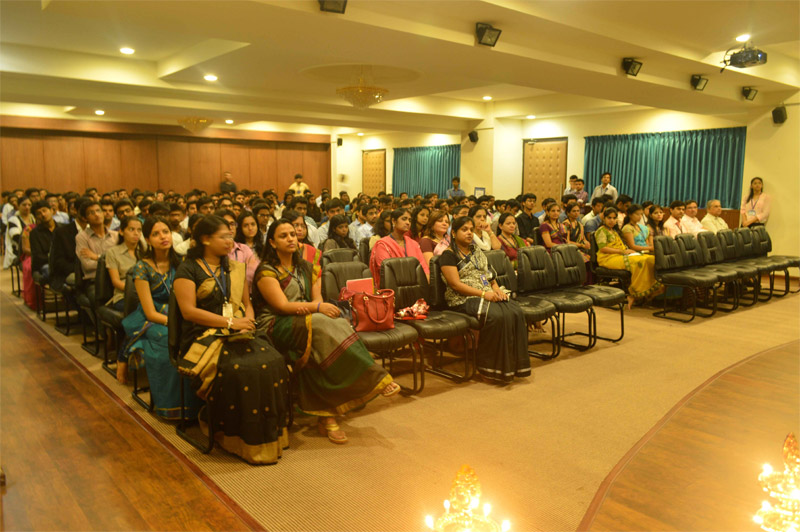
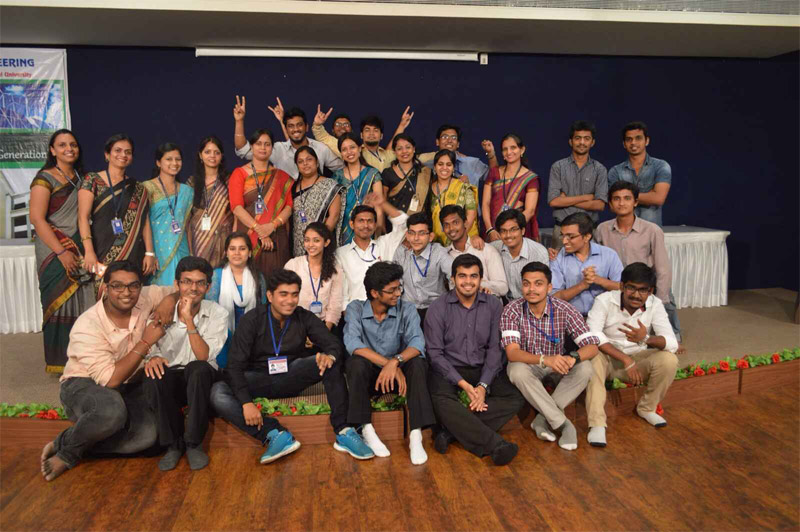
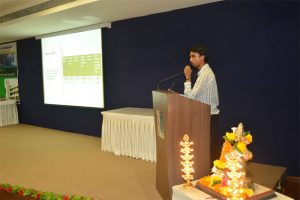
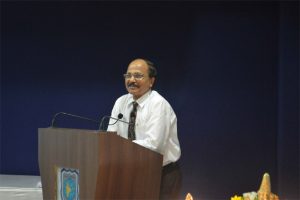
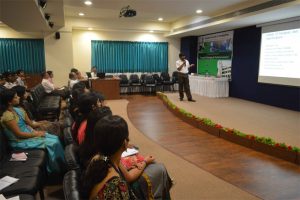
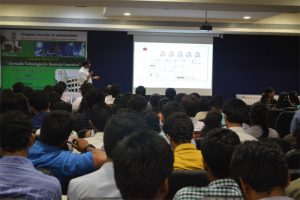
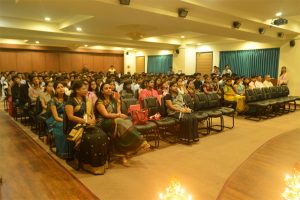
Atharva’s Virtual Classroom is equipped with state-of-the-art facilities which enable professors and students to attend and deliver high definition live video classes from any device, any location and using any platform with the help of Atharva’s WizIQ technology.
Virtual Classroom facility is meant to bridge the physical distance between teachers and students who are at different physical locations. Atharva Virtual Classroom is capable of transmitting and receiving interactive high-definition video classes across the globe through internet. This room is also equipped with campus LAN and Wi-Fi facility.
Software Used: WizIQ
Hardware Used: Polycom, Wacom Digital Pen
Features of ACE’s Virtual classroom:
- All the different horizons are covered (Technical / Non Technical /Soft skills )
- High Quality Audio Video Quality
- Two Way Interactive sessions
- Use of any device (Mobile phone, laptop) to attend sessions by experts.
- Location constraint is removed. (Student can be at any location)
- Faculties and students can use equipments from virtual classroom to broadcast their own sessions via internet
Virtual Lectures by ELEC Faculties in First Half 2019
| Sr. No | DATE | CLASS/DEPARTMENT | SPEAKER | INSTITUTE/ORGANISATION | SUBJECT IN-CHARGE | TOPIC | TIME |
| 01 | 04th April 2019 | T.E / ELEC | Prof. Pratap Kumar Koplu | COEP, Pune | Prof. Priynka Sharma | “Switchgear Protection and Relaying” | 03:00 P.M to 05:00 P.M |
| 02 | 11th April-2019 | T.E / ELEC | Prof. Shreelakshmi M.P | NIT, Calicut | Prof. Shreyashi De | “Introduction to BLDC Motor, its Applications and its Control” | 09:30 A.M to 11:30 A.M |
Virtual Lectures by ELEC Faculties in Second Half 2018
| Sr. No | DATE | CLASS/DEPARTMENT | SPEAKER | INSTITUTE/ORGANISATION | SUBJECT IN-CHARGE | TOPIC | TIME |
| 01 | 28th August – 2018 | S.E / ELEC | Prof. Pratap Kumar Koplu | COEP, Pune | Prof. Rashmi Chaugule | “Basics of Magnetism and Electromechanical Energy Conversion” | 02:00 P.M to 04:00 P.M |
| 02 | 19th October -2018 | T.E and B.E / ELEC | Prof. Jaydeep. P. Shah | K.K Wagh COE, Nashik | Prof. Shreyashi De | “Recent Trends in Wind Energy System” | 09:30 A.M to 11:30 A.M |
Virtual Lecture Reports
- Virtual Lecture on “Introduction to BLDC Motor, its Applications and its control” Dated 11/04/2019
- Virtual Lecture on “Switchgear Protection and Relaying power system” Dated 04/04/2019
- Virtual Lecture on “Recent Trends in Wind Energy” Dated 19/10/2018
- Virtual Lecture on “basics of Magnetism and Electromechanical Energy Conversion” Dated 28/8/2018
- INDUSTRIAL VISIT TO HVDC TERMINAL STATION, PADGHA on 29.09.2023
- INDUSTRIAL VISIT TO ACE SUBSTATION, ACE CAMPUS, MALAD on 27.09.2023
- One Day Industrial Visit to TATA POWER, NESCO Goregaon on 13/09/2023
- One Day Industrial Visit to (IDEMI), Sion, Mumbai on 10/02/2023
- Industrial Visit to HVDC Terminal Station Padgha on 14/10/2022
- Industrial Visit to ACE Substation on 20/09/2022
- One Day Industrial Visit to HVDC Terminal Station, Padghe on 09/03/2020
- One Day Industrial Visit to Sage Automation,Thane on 05/02/2020
- One Day Industrial Visit to SMEC Labs, Andheri on 04/02/2020.
- One day industrial visit to SMEC Labs, Mumbai dated on 13/09/2019
- Three Days Indutrial Visit to L&T Training Centre, Madh Jetty, Malad dates 4th to 6/04/ 2019
- One day Industrial Visit to Maharastra State Load Despatch Centre, Kalwa Dated 23/03/2019
- One Day Indutrial Visit to Sage Automation, Naupada, Thane dated 1/3/2019
- One day Industrial Visit to Oil & Natural Gas Corporation Limited – ONGC, Dehradhun,Uttarakhand dated 26/2/2019
- One Day Indutrail Visit to Inter Solar System Pvt. Ltd, Chandigarh dated 8/2/2019
- One Day Industrial Visit to High Voltage direct current transmission grid, Padghe dated 11/09/2018
- One Day Industrial Visit to TATA POWER SKILL DEVELOPMENT INSTITUTE (TPSDI), Shahad Dated 05/09/2018